
17
Adding Houseplants to Your Home Can Help Banish Cabin Fever
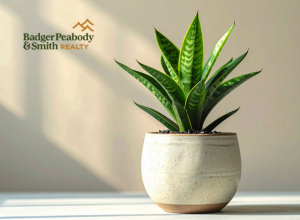 During my teenage years, the one and only houseplant my family had was a snake plant, commonly known as a mother-in-law plant or mother-in-law's tongue. It sat in a small pot in the living room and followed my mother from that house through a couple of moves and finally to the apartment she lived in before passing away.
The plant is known for its sword-shaped, green-striped leaves with yellow margins and is considered low-maintenance. Unbelievably, 50 years later, the plant or a cutting from it (we're not quite sure) now lives at my brother's home and has grown considerably from its original pint size into a large four-foot-tall specimen. It's most likely survived all these years through benign neglect and occasional attention. Its current location is apparently one it likes, situated in the front hallway near a narrow window with filtered light and only watered when someone remembers to do so.
If you're like me and are experiencing cabin fever right about now as late winter gives way to spring, one of the antidotes I find most comforting and helpful is to add a houseplant or two to my home — although I've yet to add a snake plant.
Houseplants are wonderful to look at and add life and beauty to any space with their various colors, textures, and scents. Add a pretty pot or other container, and they become an interesting focal point on a table, shelf, or mantle.
Numerous studies expound on houseplants' benefits, primarily as air purifiers and stress relievers. Caring for plants takes us out of ourselves and gives us hope on dark days that spring is coming, the temperature is rising, and we'll once again be looking out our windows at green grass.
If you're considering adding plants to your home during the waning days of winter and early spring or at any time at all during the year, you'll save time and money by consulting a knowledgeable florist or staff at a greenhouse, who can guide you to the best plants for your unique situation.
Cherry Blossom Floral - Littleton, NH
Address: 240 Union St., Littleton, NH 03561
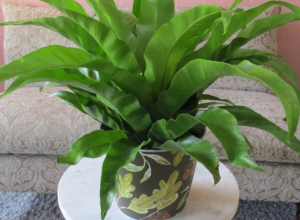 At Cherry Blossom Floral in Littleton, owner Dawn Berg advises customers to do their homework before purchasing plants, considering both the space available and the source of light in each room. The shape of a plant will also determine where it can be placed. For instance, a small houseplant could grace a coffee table or be tucked onto a bookshelf, a fern might hang on a hook, while a large tree-like houseplant would require a more spacious area, such as on the floor in a corner.
"Anything that is blooming or that you want to see bloom definitely needs to be near windows where it receives sunlight," says Dawn, with begonia varieties and many cacti varieties doing well with lots of light.
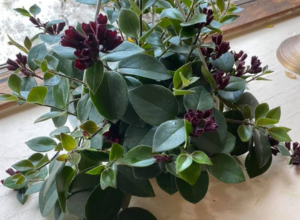 Among the houseplants she suggests for low-light areas are Echeveria, Dracaena (snake plants), Spathiphyllum (peace plants), and Schefflera (umbrella plants). Caladiums are another option as they are "pretty easy, and they have colorful foliage that is a mix of pink, red, white, and green."
In her 19th year of business in Littleton, Dawn and her staff help customers choose houseplants, order bouquets of flowers, and design floral arrangements for weddings or other events. "I'm so fortunate to work with plants and flowers every day," she says.
Ruthie's Flower Shop - Conway, NH
328 White Mountain Highway, Conway, NH 03818
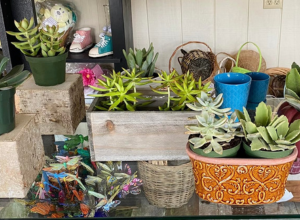 Ruthie's Flower Shop in Conway has been serving customers in the Mount Washington Valley for 20 years. The full-service shop specializes in flowers for every occasion and a variety of houseplants to spark up customers' homes.
Sales associate Carmen Maura says that "having a plant to take care of makes me take care of myself." She likes to talk to her plants and laughs that she should "probably say nice things to myself, too."
Several studies indicate that talking to your houseplants does indeed help them grow better, and the connection with nature, even on a miniature scale, can put the person tending them in a calmer frame of mind.
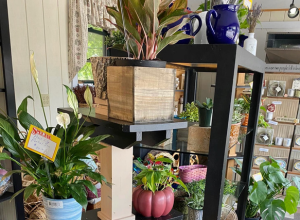 Carmer says that houseplants encourage self-care. "Taking care of oneself and taking care of the plants in your home are equally important, with both benefiting."
She enthusiastically recommends rubber plants as "no stress, easy care, fun and funky additions to any living space. Succulents are nice and easy to take care of, too. Always a plus. And tropicals are pretty to look at. There are so many nice and interesting plants to choose from!"
Whether this is the year that you purchase your first houseplant or add to your growing collection, don't hesitate to connect with staff at your favorite florist or greenhouse to get a "green fix" to help banish cabin fever, along with great advice about the kinds of houseplants that will thrive in your home.
Eileen Alexander, a New Hampshire native, made a short detour through North Carolina before returning to the Granite State. She has a yen for old homes with character, colorful flower gardens, and expansive mountain views.
See this article and more in the spring edition of Journey Home, Badger Peabody & Smith Realty's magazine focusing on New Hampshire real estate and local living.