
11
Tips to Keep Your Trees Healthy & Happy
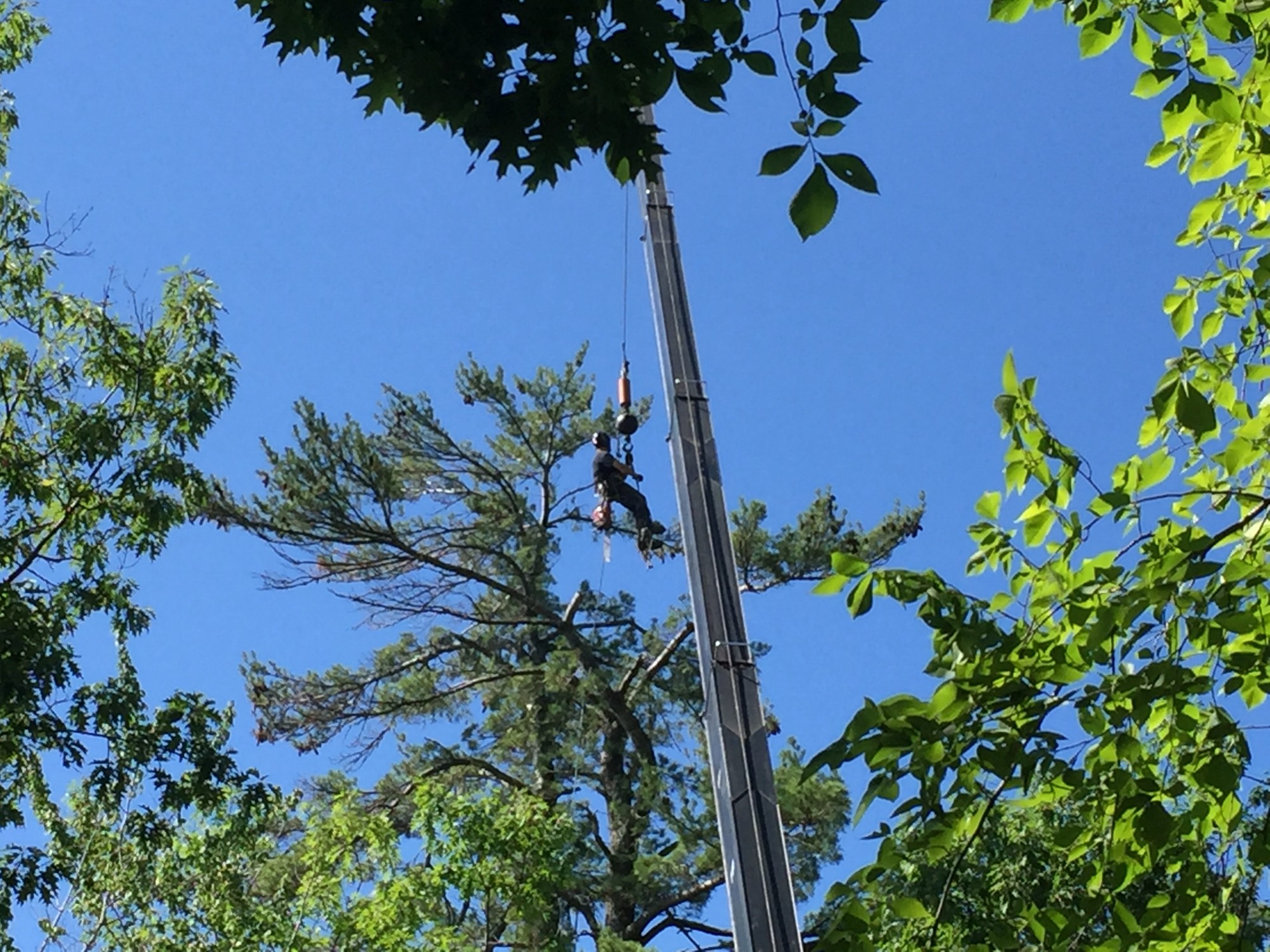 New Hampshire has so many trees we often take their presence for granted and don't take a close look at them, even those in our own backyards, until there is a problem like storm damage.
When choosing a tree to plant on your property consider its purpose, advises the Arbor Day Foundation. Are you planting for aesthetics, for privacy, for flowers, to attract birds and other critters or to prevent runoff and erosion? This can help you decide on its suitability.
For instance, says certified arborist Myles Barnes of Barnes Tree & Landscape in Lyman, a homeowner can save on heating and cooling costs by planting trees around their home. "Trees provide shade in hot weather so they help cool your house during the summer, plus they act as a windbreak in the winter helping to keep your home warmer."
Barnes says there is a mistaken belief that trees near a house are problematic. "Trees near the house are not necessarily a problem as long as they don't negatively impact the structure" with such things as overhanging branches or roots that interfere with septic systems.
Trees add beauty and value to a property. It's all about curb appeal. Consulting a tree care expert can help you make the right choices for your property, Barnes says. "I like to give customers options: what would you like to see — take trees out to open up a view, trim trees back to shape the tree, prune to get rid of dead and dying branches, plant new trees, or provide yearly maintenance?"
Keep Your Trees Healthy & Strong
These tips will help you keep your trees healthy and looking their best:
• Pick Trees Suited to Your Area: Sun, soil and space should all be taken into consideration. Be sure your trees will get enough sun to thrive. Choose trees that are suited to your hardiness zone. Provide enough space so a tree's canopy has room when it is fully grown and won't impact power lines or structures. Be sure to check underground utility lines before planting.
• Water Your Trees: Newly planted trees need water. Once they've had a few years' growth and established their root systems they can usually do without regular watering as they are able to handle stresses like drought.
• Mulch: Mulch is an insulator, protecting the tree from heat and cold and helping it to retain water. The mulch also protects the tree trunk from accidental injury from events like a lawn mower getting too close. Remove the grass from under the tree and apply two to four inches of mulch, being careful to keep it away from the tree's trunk.
• Fertilize: A soil test can help you determine the nutrients that your trees need to thrive. Follow up by applying a slow-release fertilizer on a regular basis to give your trees the nutrients they need to keep them healthy.
• Prune: Pruning removes deadwood and also improves the tree's overall structure. Branches and twigs that are dead or damaged on a small tree can usually be removed by a homeowner, but major pruning, on large trees especially, should be left to professional tree experts for your safety.
• Schedule A Checkup: To maintain the health of your trees, schedule yearly checkups with a certified arborist. Certified arborists are trained to spot signs of pests or diseases that you might miss, and can provide you with options if problems are discovered.
Calling in the Pros
Most people call a tree expert when there is a problem such as a dead or dying tree, a tree that has been damaged in a storm, or a tree that could drop its limbs onto a house or garage.
Dick Johnson, the owner of Top Notch Tree Experts in Campton, has been in business for 30 years, is fully insured and does tree work for a number of towns and cities as well as for the New Hampshire Department of Transportation.
His crews provide residential take downs of dead and dying danger trees and storm damaged trees, and do some view opening. For the most part his crews use cranes as they are more economical and have less impact on a homeowner's property.
Barnes recommends working with a fully insured company so the homeowner isn't liable if problems arise during the tree removal. "Anyone having tree work done should request that the tree expert's insurance company provides a certificate of insurance before work begins," he says. "Get the certificate directly from the insurance company."
Both he and Barnes note that more and more insurance companies are requiring homeowners to take care of the trees on their property.
Both tree experts say that it's best to be proactive if you have a problem tree. There is a misconception, they note, that if a homeowner waits for a tree to finally fall and it damages the house or another structure then the insurance company will pay for it.
"It's just not true," says Barnes. "Many more insurance companies are inspecting properties and refusing to insure them if the homeowners don't take care of problem trees."
Calling in a tree care expert before you have a problem will save you money in the long term, say Barnes and Johnson.
Photo Courtesy of:
Top Notch Tree Experts in Campton, featuring a "Top Notch Tree" expert on the job!